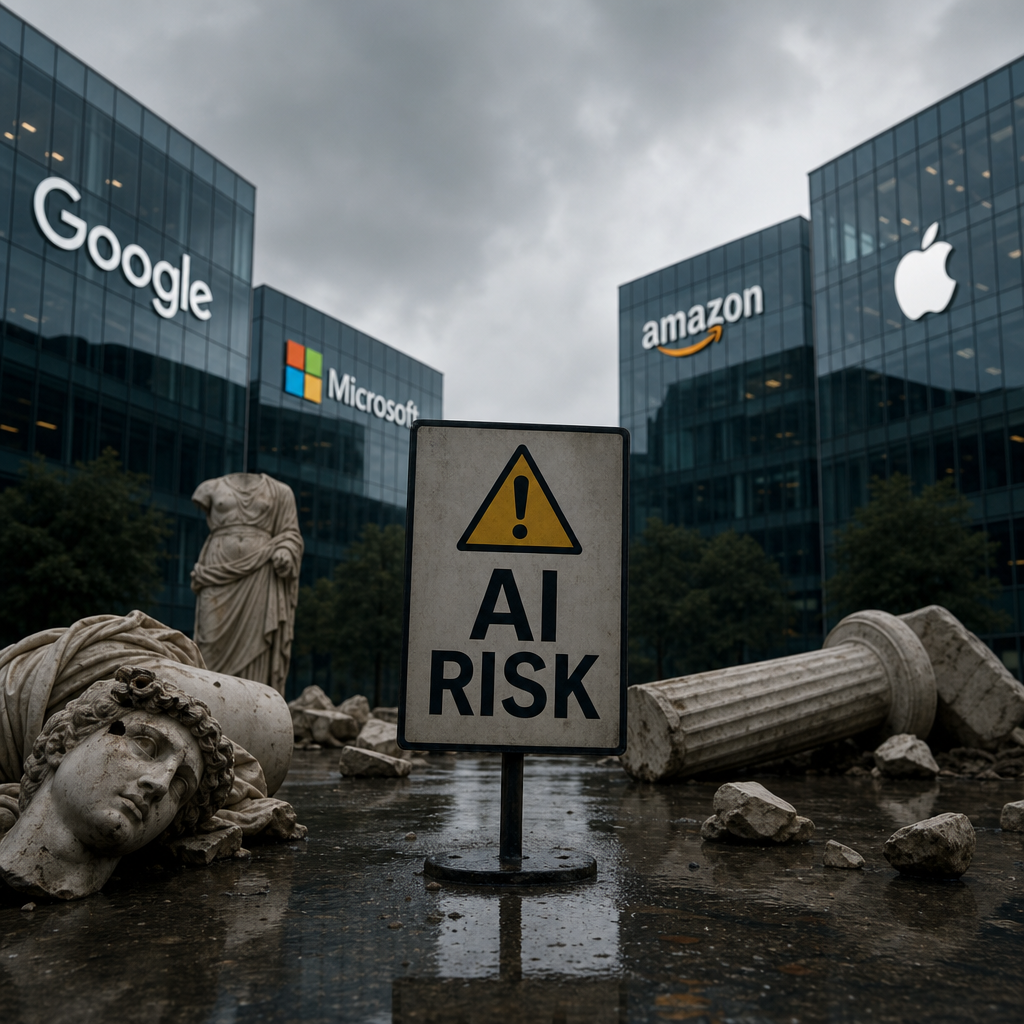
Big Tech’s AI Backstops: Navigating the Fine Line Between Brilliance and Ignominy
In the ever-evolving world of technology, the rise of artificial intelligence (AI) stands as both a testament to human ingenuity and a challenge to the ethical and operational frameworks of modern tech giants. As companies like Google, Amazon, and Microsoft push the boundaries of AI, one fundamental question looms large: What happens when the safety nets designed to catch AI malfunctions become their Achilles’ heel?

AI backstops, or the fail-safes designed to halt catastrophic AI failures, are a focal point of debate in boardrooms and labs alike. These backstops are championed as the essential safety mechanisms that can interrupt an AI system’s operations to prevent harm. However, the efficacy and ethical implications of these backstops raise concerns about their potential to transform from trusty safeguards to sources of ignominy for Big Tech.

Understanding AI Backstops
AI backstops are mechanisms implemented within AI systems to ensure safety and reliability. They function to stop AI operations when processes threaten to derail into harmful territory. But how effective are these backstops, really?
There’s an undeniable complexity in designing AI backstops. Companies must balance innovation with caution while factoring in the unpredictable nature of AI behavior. Many organizations struggle with this delicate equilibrium, often defaulting to economic motivations over ethical considerations.
The Role of AI Backstops in Tech
- Prevention of Harm: By proactively halting unpredictable behavior, backstops act as the last line of defense against AI-induced errors.
- Ensuring Ethical Compliance: Compliance with ethical guidelines and legal frameworks is essential. Backstops must integrate seamlessly with these directives to maintain continuous alignment.
- Reputation Management: As guardians of public perception, robust backstops can help tech companies avoid reputational damage caused by AI failures.
Challenges in Implementing AI Backstops
However noble their intentions, AI backstops are not without their challenges. One of the most significant issues is the unpredictability of AI systems themselves. The ability to predict every potential failure point is a daunting, if not impossible, task.
Moreover, the integration of these safety measures into well-established systems is fraught with technical difficulties. The complexity of the algorithms, combined with a lack of transparency in AI operations, can often lead to insufficiently robust backstops.
Case Studies: When AI Backstops Failed
Notable case studies illustrate both successes and failures in AI backstop applications. One need only look to instances where backstops either failed to act effectively or intervened unnecessarily, leading to unwanted outcomes.
- The Autonomous Vehicle Conundrum: Autonomous vehicle companies have faced significant challenges in implementing effective backstops to avoid accidents, sometimes with tragic consequences.
- Financial AI Systems: In the world of finance, AI algorithms must be tightly controlled. Instances where backstops have failed to prevent erroneous transactions serve as cautionary tales.
The Future of AI Backstops in Big Tech
As AI continues to evolve, so too must the approaches to implementing backstops. The challenge lies in striking a balance between allowing innovation to flourish and ensuring robust safety measures are in place.
A Collaborative Effort: Industry and Regulation
Bringing together industry stakeholders, regulators, and ethicists is essential for the continued success of AI technologies. By fostering collaboration, the tech industry can hope to address the gaps that currently mar the efficacy of AI backstops.
| Company | AI Risk | Backstop Solution |
|---|---|---|
| Data Misuse | Enhanced Data Access Protocols | |
| Amazon | Algorithm Bias | Bias Detection and Mitigation Mechanisms |
| Microsoft | Operational Overreach | Scalable Interruption Systems |
Ultimately, the journey of AI backstops in Big Tech is one that demands diligence, adaptability, and ongoing commitment to responsible development. By keeping these pillars in mind, we can navigate the journey with an eye towards safety and innovation.


