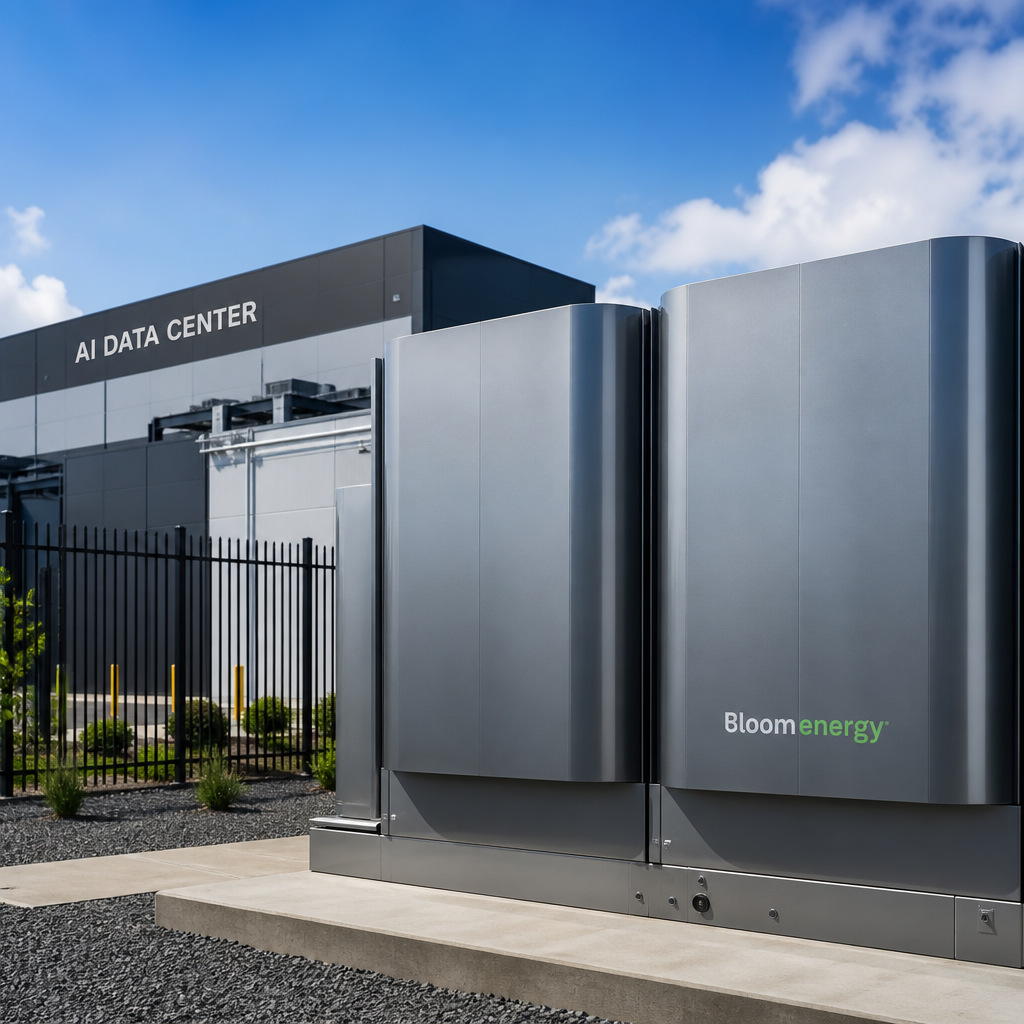
Big Tech’s Turn to Bloom Energy: Revolutionizing Power for AI Data Centers
The future of technology is being shaped not just by what happens inside our devices, but also by the powerful forces that keep them running. As AI continues to advance, tech giants are seeking more efficient, sustainable solutions to power their vast data centers. Enter Bloom Energy, a company offering cutting-edge energy solutions that are gaining significant traction among big tech players.

Bloom Energy is spearheading a transformation in how technology firms power their massive data operations. Their innovative approach is drawing attention for its ability to meet the increasing power demands of AI data centers while aligning with tech companies’ sustainability goals. But what exactly makes Bloom Energy a preferred choice for powering the engines of today’s digital world? Let’s explore.

The Rise of AI and Its Power Challenges
AI technology requires immense computational power, leading to skyrocketing energy needs. As data centers expand, the demand for reliable and efficient energy solutions has become critical. Traditional energy sources are becoming less viable due to environmental and economic factors, creating a need for more sustainable alternatives.
Boom in Data Center Expansion
Global data center capacity has seen unprecedented growth over the recent years. This expansion is closely tied to the rise in cloud computing and AI applications. Businesses and consumers now expect instantaneous processing times and seamless service delivery.
- Cloud service providers are investing billions to boost infrastructure.
- AI applications require fast, reliable data processing and storage solutions.
- Sustainability is increasingly becoming a key business consideration in technology decisions.
Why Traditional Energy Sources Are Insufficient
The reliance on fossil fuels and traditional power grids poses significant challenges. The environmental impact and the vulnerability to power disruptions are causing tech companies to rethink their energy strategies.
- Carbon emissions from data centers contribute heavily to global pollution.
- Operational costs and energy inefficiencies are growing concerns.
- There’s a rising demand for renewable, resilient energy solutions.
Why Bloom Energy is Leading the Charge
Bloom Energy’s solutions are at the forefront of addressing these energy challenges. Their technology offers an eco-friendly alternative, ensuring both sustainability and efficiency for data centers.
Innovative Energy Solutions
Bloom Energy utilizes fuel cell technology to provide clean and reliable power. By using a chemical process rather than combustion, they drastically reduce emissions while offering unmatched efficiency.
| Feature | Traditional Energy | Bloom Energy |
|---|---|---|
| Carbon Emissions | High | Low |
| Reliability | Moderate | High |
| Cost Efficiency | Variable | Consistent |
Benefits of Bloom Energy’s Fuel Cells
Bloom’s fuel cells offer consistency and stability, crucial for the uninterrupted operation of data centers. They can operate independent of the grid, minimizing outages and ensuring continuous service delivery.
- Savings on electricity costs through efficient energy production.
- Reduced dependency on external power grids prone to failure.
- Support for carbon neutrality commitments with lower environmental impact.
The Future of Data Center Energy
Looking ahead, the symbiosis of AI, data centers, and advanced energy solutions like those from Bloom Energy will become even more tightly woven. As technology advances, so does the responsibility of tech giants to adopt practices that are both forward-thinking and globally conscious.
The future lies in scaling these solutions to meet the global data demands and further innovating to provide even more sustainable options.